



3 questions to consider for connecting with today’s workforce
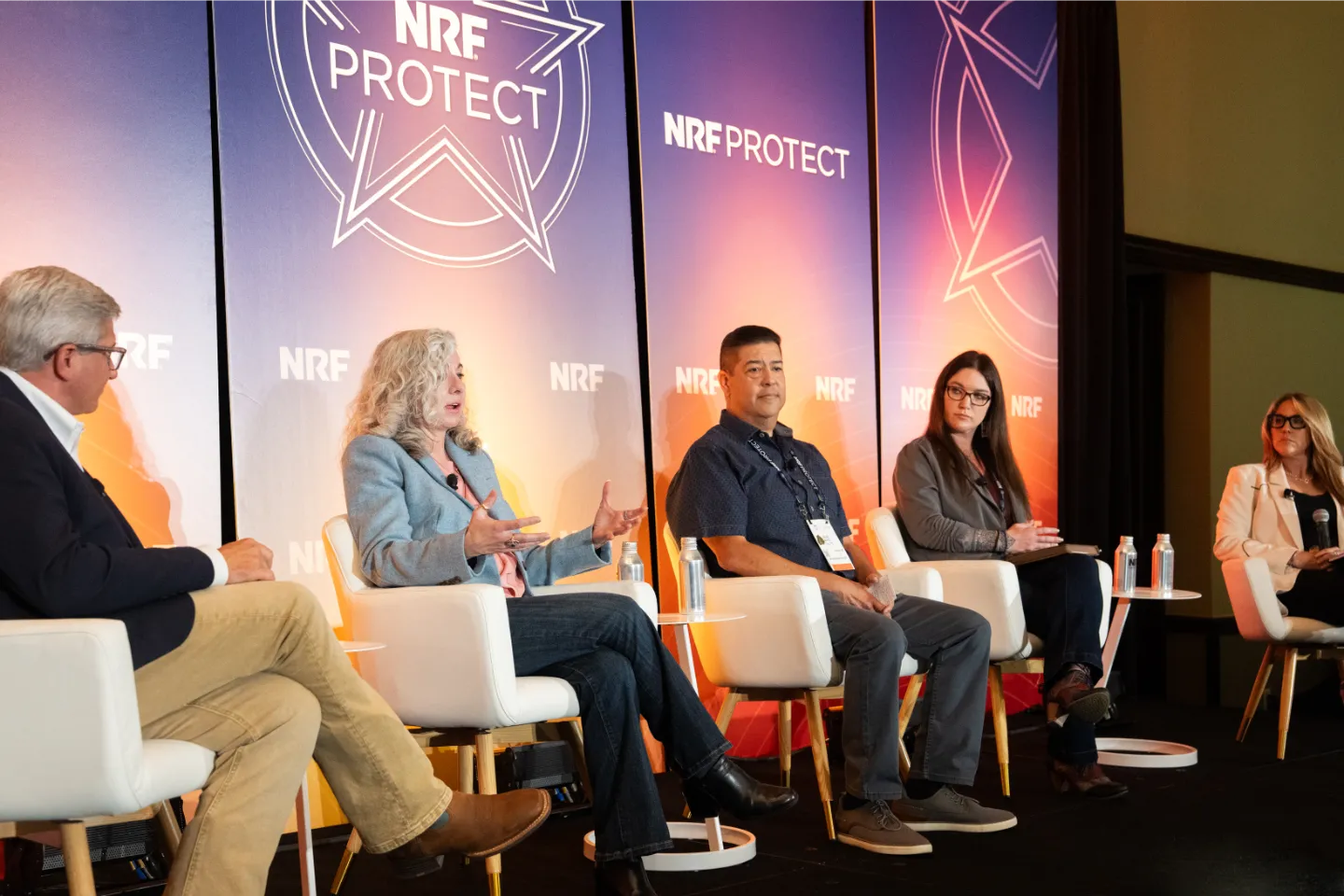
From left: David Lund, CFI, LPC (International Association of Interviewers), Jennifer Dayss (Signet Jewelers), Blue Montez (Tilly's), Dani Perez (The Winn-Dixie Company) and Laura McClellan (Ariat International Inc.)
NRF PROTECT
Stay up to date on the latest news and articles about NRF PROTECT.
Today’s workforce — sometimes spanning up to five generations in a single organization — brings a wide range of experience, expectations and needs to the job. It’s easy to categorize and stereotype, especially when developing strategies to reach them all. But is that really the best plan?
For leaders still using decades-old training videos on asset protection and loss prevention in this world of TikTok and YouTube, “We have to imagine that messaging is not getting across the way we want it to,” Blue Montez, director of loss prevention at Tillys, said at NRF PROTECT 2026 during a discussion on adapting LP strategies to a multi‑generational workforce. The session was led by David Lund, CFI, LPC, executive director of the International Association of Interviewers.
Gallup’s State of the Global Workplace: 2025 Report showed that employee engagement had fallen to 21%, matching its lowest level since 2020, Lund said. And when engagement drops, confidence often falls with it.
How can we approach generational differences?
The multi-generational panel emphasized the importance of clear communication. They touched on strategies such as reverse mentoring, when junior or less experienced workers mentor leaders or senior staff members. They explored the need to develop emotional intelligence, particularly in being able to distinguish between anger and fear. And they urged building rapport and trust before they’re needed.
Workers — regardless of age — need to feel psychologically safe when it comes to reporting. Sometimes balancing that with accountability can be challenging. Long gone are the days of “because I said so.”
“Younger generations ask why, and they expect an answer,” said Jennifer Dayss, senior manager of fraud and ORC investigations with Signet Jewelers. “And sometimes, it’s hard to give.” But when they receive explanations, they may be more open to providing feedback and ideas.
How can leaders build trust?
Dani Perez, asset protection training and development manager at The Winn-Dixie Company, is working toward a Ph.D. in learning science. She identified herself as part of Generation Y — those born between 1981 and 1996 — along with almost half of the room, according to a quick Slido poll. Generation X, born between 1965 and 1980, was close behind, followed by Baby Boomers (1946-1964) and a smattering of Generation Z (1997-2012) attendees.
For some generations — such as those with more complicated relationships with authority — [trust] might take longer to build.
Patterns emerge from generational experience, Perez said, and that can play out in how a person perceives a potential risk.
She spoke about understanding what’s happening in the brain when someone doesn’t feel psychologically safe. In a state of perceived threat — whether real threat or social risk, such as looking incompetent — the brain defensively goes “offline.” Logic is bypassed. Communicating with an associate in this state is not likely to be effective.
Trust and safety, on the other hand, are built every day. “Your brain is always looking for those red flags, those perceived threats,” Perez said. People notice, for example, what’s said and what’s not said, what happens when people speak up, or the deep sigh. Trust won’t simply appear at the moment of reporting; by then, it’s too late.
Lund agreed: “If you’re going to have an effective conversation with somebody, you’re going to have to build effective rapport.”
How do employees learn best?
Popular culture has a way of portraying those in law enforcement and loss prevention as scary and intimidating people who will “shine a light in your face,” Dayss said. A loss prevention visit to a retail store, then, can put everyone on edge.
“We don’t want that environment,” she said. “We want the environment where I come into your store, and I’m approachable and I’m honest. I’m going to tell you the truth. And I’m going to chit chat with you, too, so it’s not always just coming in to do an investigation … . If they can trust you, they will talk to you.”
For some generations — such as those with more complicated relationships with authority — this might take longer to build.
Laura McClellan, manager, operations and loss prevention, U.S. retail with Ariat International Inc., said it’s easy to fall into assumptions that younger workers don’t want feedback, that older people are resistant to technology, or that Gen Z isn’t loyal.
Rather than asking how to manage Gen Z, she said, “a better question is, ‘How does this employee learn best?’ How do they receive feedback? How do they give feedback? What motivates them?”
A leadership approach like this, she said, “is going to be great for all generations.”
Lund closed with a simple yet compelling idea for success regardless of generation: Treat people like people.
“I think Laura really hit the nail on the head with that,” he said. “While I don’t love this term, I’m embracing it wholeheartedly when it comes to this concept: You’ve got to meet people where they are. Because if you don’t look to understand how they will receive information or what their perspectives are — or you feel like, this is just going to have to work for everybody, because that’s what we have time and money for — I think we’re going to find failure.”